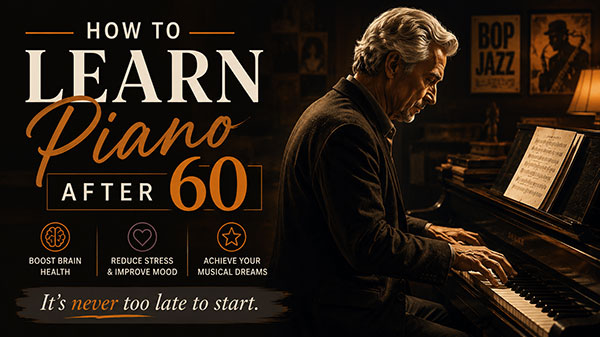
How to Learn Piano After 60: It’s Never Too Late to Start
Many people believe that learning the piano is something you need to begin as a child. While starting young can have certain advantages, the truth is that you can learn piano at any age—including after 60. In fact, many older adults discover that learning music becomes one of the most rewarding experiences of their lives.
Whether you’re newly retired, looking for a fulfilling hobby, or finally pursuing a lifelong dream, learning piano after 60 can bring joy, mental stimulation, and a sense of accomplishment.
Why Learning Piano After 60 Is a Great Idea
1. Keeps Your Brain Active
Playing the piano engages multiple areas of the brain simultaneously. Reading music, coordinating both hands, maintaining rhythm, and listening carefully all provide an excellent mental workout.
Studies have shown that learning a musical instrument can help improve memory, concentration, and cognitive flexibility. For adults over 60, this mental stimulation can contribute to overall brain health and lifelong learning.
2. Reduces Stress and Improves Well-Being
Music has a unique ability to calm the mind and lift the spirit. Sitting down at the piano for even 15 to 20 minutes a day can help reduce stress, improve mood, and create a sense of relaxation.
Many older learners find that piano practice becomes a peaceful part of their daily routine.
3. Provides a Sense of Achievement
Learning a new skill later in life can be incredibly empowering. Each new song, chord, or technique mastered provides a feeling of progress and success.
You don’t need to become a concert pianist to enjoy the benefits. Simply being able to play your favorite songs can bring tremendous satisfaction.
Common Concerns About Learning Piano Later in Life
“Am I Too Old to Learn Piano?”
Absolutely not.
Age does not determine your ability to learn music. While children may absorb certain concepts quickly, adults often have advantages such as patience, discipline, and a stronger understanding of how to learn effectively.
Thousands of people successfully begin piano lessons in their 60s, 70s, and even 80s.
“What If I Can’t Read Music?”
Many beginners start with no musical background at all.
Modern piano teaching methods often combine simple music reading with ear training, chord playing, and practical exercises. You can learn at your own pace without feeling overwhelmed.
“Will My Fingers Be Flexible Enough?”
Piano playing doesn’t require extraordinary finger strength or flexibility. Regular practice gradually improves dexterity and coordination.
A good teacher can also recommend exercises tailored to your comfort level and physical abilities.
Tips for Learning Piano After 60
Start with Realistic Goals
Focus on enjoying the learning process rather than comparing yourself to others.
Set small, achievable goals such as:
- Learning a simple melody
- Playing with both hands together
- Mastering a favorite song
- Practicing for 15 minutes daily
Small victories build confidence and motivation.
Practice Consistently
Consistency matters more than long practice sessions.
Even 15–20 minutes a day can produce excellent results when practiced regularly. Daily repetition helps develop muscle memory and reinforces new skills.
Choose Music You Love
Learning songs you enjoy makes practice much more rewarding.
Whether you prefer classical pieces, jazz standards, movie themes, hymns, or popular songs, playing music that resonates with you will keep you motivated.
Consider Taking Lessons
While self-study is possible, a qualified piano teacher can help you progress faster and avoid developing bad habits.
Many teachers now offer online lessons, making it easier than ever to learn from the comfort of your home.
The Benefits Go Beyond Music
Learning piano after 60 isn’t just about playing notes on a keyboard. It’s about personal growth, creativity, and lifelong learning.
Piano can help you:
- Build confidence
- Improve concentration
- Stay mentally engaged
- Meet new people through music communities
- Express yourself creatively
- Enjoy a meaningful and rewarding hobby
If you’ve ever dreamed of playing the piano, there’s no better time to start than now. Age is not a barrier to learning music. With patience, consistent practice, and a positive mindset, you can make remarkable progress and enjoy every step of the journey.
Remember, the goal isn’t perfection—it’s enjoyment, growth, and the satisfaction of learning something new.
So sit down at the keyboard, play your first notes, and begin an exciting musical adventure. After all, it’s never too late to learn piano.